
Why the base matters more than the grass
Artificial grass looks simple, but the finish you see depends on what lies underneath. Grass laid straight onto soil, or onto a thin layer of sand, soon develops dips, ripples and puddles. A properly built base is what keeps the surface flat, firm and free-draining for years.
Artificial grass is one of the services offered by Daniel John Landscapes across Southampton, Portsmouth and the wider Hampshire area.
How we build the base
The existing lawn and topsoil are removed to a suitable depth. A layer of crushed stone is spread and compacted to form a stable foundation, followed by a finer layer that is levelled and compacted again to give a smooth bed for the grass. A weed membrane helps stop growth coming through from below.
- Excavation of the old lawn and soil
- Compacted stone sub-base
- Fine levelling layer for a smooth finish
- Weed membrane beneath the grass
Drainage
Artificial grass is backed with drainage holes, so water passes straight through. That only works if the base below can carry it away. A free-draining stone base allows rainwater to soak through rather than sitting on the surface, which is especially important on heavier soils or where a lawn sits lower than the surrounding ground.
Edging that keeps everything in place
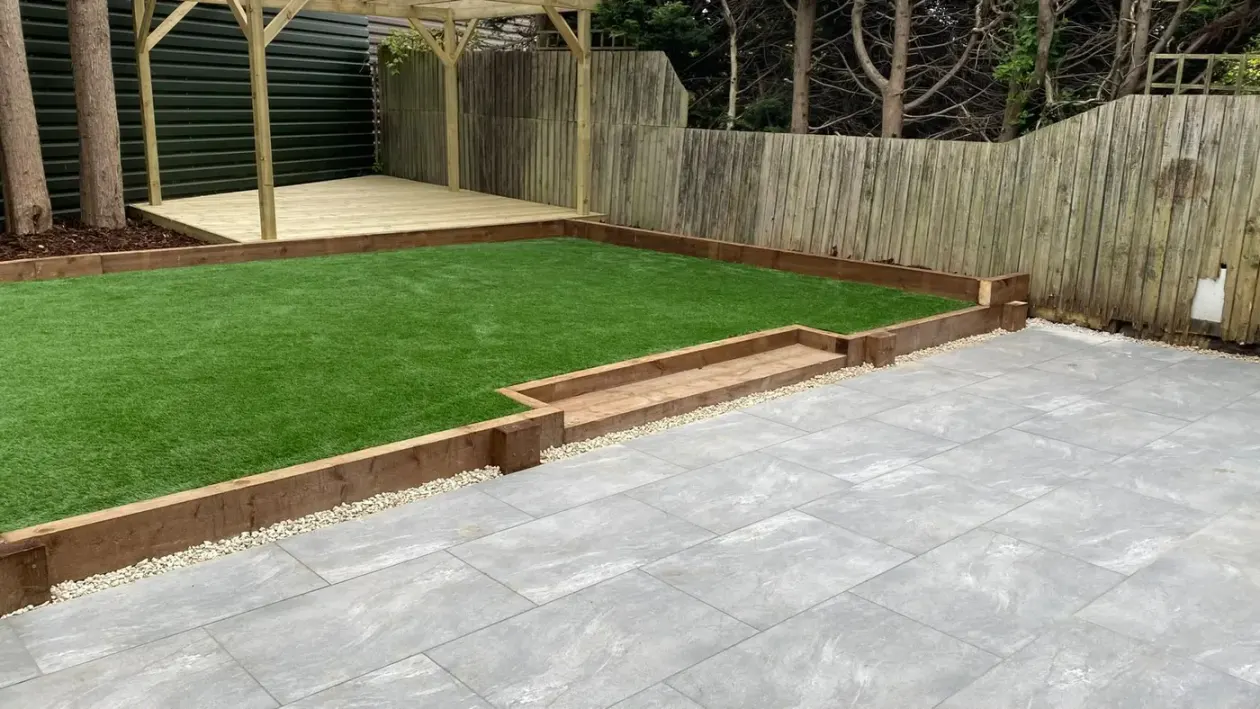
The edges are where artificial grass is most likely to lift or move. A firm perimeter, such as timber sleepers, treated edging boards or a paving edge, gives the grass something solid to fix to and creates a clean outline. Several jobs in our projects gallery show artificial lawns framed by sleepers or set neatly into a porcelain patio.
Joins between rolls are carefully aligned so the pile runs in the same direction, making the seams hard to spot.
Pets, children and play areas
Artificial grass is popular with families and dog owners because it does not turn to mud and does not need mowing. Good drainage is essential where pets use the lawn, and it can be rinsed down when needed. For play areas, it gives a clean, green surface around equipment; our gallery includes a timber play tower with slide, rope bridge and swings finished with artificial grass and picket fencing.
Is artificial grass right for your garden?
It suits shaded gardens where real grass struggles, small courtyards, busy family spaces and anyone who wants to spend less time on upkeep. Some people still prefer the feel of a natural lawn, and we can lay new turf instead. For a breakdown of what affects the price, read our artificial grass cost guide. Dog owners may also find our guide to artificial grass for dogs useful.
Our installation step by step
On the day work starts, the area is marked out and protected, with paths laid for barrows so that neighbouring lawns, borders and paving are not damaged. The old turf and soil are lifted and taken away. Any edging that needs building, such as sleepers or treated boards, goes in next, because it sets the finished height of the lawn.
The stone base is spread, raked and compacted in stages, then the fine layer is screeded and compacted again until the surface is smooth and true. The membrane is laid, followed by the grass, which is rolled out, trimmed tight to the edges and joined. Finally the pile is brushed up so the blades stand evenly.
Looking after an artificial lawn
Artificial grass is low maintenance rather than no maintenance. Brushing the pile against the grain every so often keeps it standing upright, particularly in busy walkways. Leaves and debris are best removed with a leaf blower or plastic rake before they break down on the surface. Where pets use the lawn, rinsing it occasionally keeps it fresh. Avoid barbecues, fire pits and very hot objects directly on the grass, as the fibres can melt.
With that simple care, and a base that was built properly in the first place, an artificial lawn should stay flat, green and usable through every season.
Frequently asked questions
Can artificial grass be laid on soil?
Not directly. The soil is dug out and replaced with a compacted, free-draining stone base so the grass stays flat and drains properly.
Is artificial grass suitable for dogs?
Yes, as long as it is laid on a well-drained base. It can be rinsed down when needed.
Will weeds grow through artificial grass?
A weed membrane is laid beneath the grass to help prevent growth from below.
Do you install artificial grass in Portsmouth?
Yes. Portsmouth is within our working area, along with Southampton, Eastleigh, Romsey, Winchester and the New Forest. See our Portsmouth page.
Can artificial grass go next to a new patio?
Yes. Combining the two is common, and building them together lets the levels and edges line up neatly.