
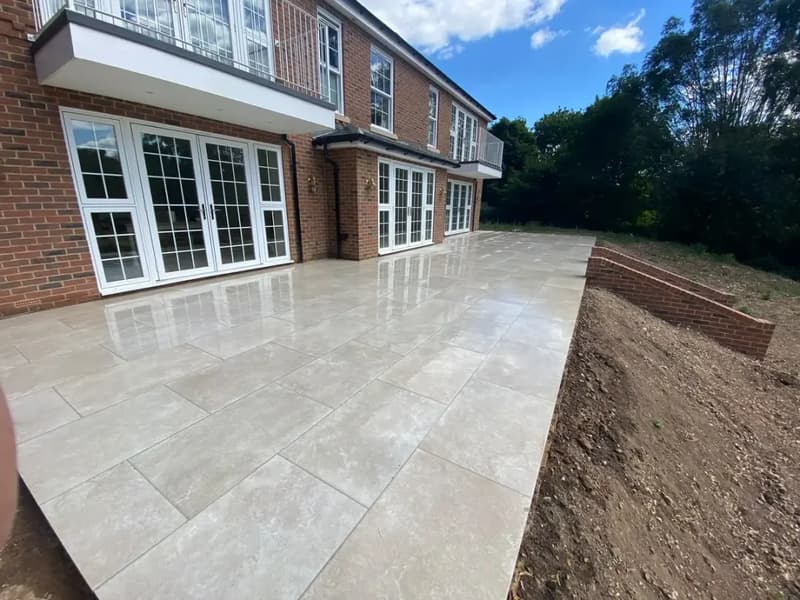
Check the ground before choosing the patio
Winchester lies on Cretaceous lower chalk with small areas of clay and loam. That mixture is a reason to investigate the proposed paving area rather than assume the whole garden drains freely. A change in ground within one plot can affect preparation and where rainwater can go.
For a patio, finished levels, supporting layers and drainage need agreeing before slabs are chosen. Natural stone can be an option for its texture and variation, while porcelain offers a different finish. Neither material removes the need for a stable, properly prepared base.
City courtyards and the wider district are not the same
The city’s historic setting includes the Cathedral, Cheyney Court, the Buttercross and the Great Hall. At a historic city-centre property, a courtyard may have limited access: check doors, turns and where materials can be stored, rather than assuming a short lawn area is a simple job.
Across Winchester, the local authority area, 36.2% of homes were detached at Census 2021. That district-wide figure does not describe every city-centre garden. A larger rear plot may offer room for several uses, while a courtyard needs decisions about the route, seating and planting to earn their space.
Choose materials beside what is already there
At a listed property, the existing building and boundary deserve attention before a garden change is agreed. Compare paving samples beside the actual walls and keep features you want to retain in the plan. Premium natural-stone paving or a timber structure can be considered without assuming they suit every historic home.
Winchester City Council is the district planning authority; Hampshire County Council having its headquarters in the city does not make it the authority for ordinary garden planning enquiries. Check proposed work affecting a listed property or a National Park setting with the relevant authority before committing.
A whole-garden plan, not separate replacements
A garden renovation brings paving, lawn, boundaries and any structures into one sequence. If your own plot changes level, mention that in the enquiry so steps and edges can be planned; a slope is not something to assume from the Winchester address.
For a lawn, consider light, wear and maintenance before choosing turf or artificial grass. Ground preparation should follow the conditions found, not a blanket claim that chalk needs extra topsoil everywhere. Fencing in Winchester covers post-hole considerations, and a pergola can be discussed around siting, access and consent.
Getting to Winchester from Sholing
We are based at 5 Gladstone Road in Sholing, on the east side of Southampton. Winchester is one of the six main areas we cover, within our 30-mile working radius. We also work across Southampton, Eastleigh, Romsey, the New Forest and Portsmouth; see our areas page or our Portsmouth landscapers page.
Daniel comes out to look at the garden in person. He checks the ground, levels and access, listens to what you want and talks through options before preparing a quote. Call 07841 510110 or send your postcode and a few details through our contact page to arrange a visit. We work Monday to Friday 8:00 to 5:00 and Saturday 9:00 to 2:00.
Frequently asked questions
Can I assume a Winchester patio will drain into chalk?
No. Small areas of clay and loam occur within the chalk setting. The proposed paving area and water route need checking before the build-up is agreed.
Would natural stone suit a historic courtyard?
It is an option, not an automatic choice. Compare texture and colour beside the existing property and consider access, layout and any consent before choosing.
Does the district’s detached-house share describe central gardens?
No. The 36.2% detached figure is across Winchester’s local authority area at Census 2021, not a description of every city-centre plot.
Who should I ask about work affecting a listed property?
Start with Winchester City Council for the property’s planning position. National Park-related proposals may also need checking with the relevant authority.