
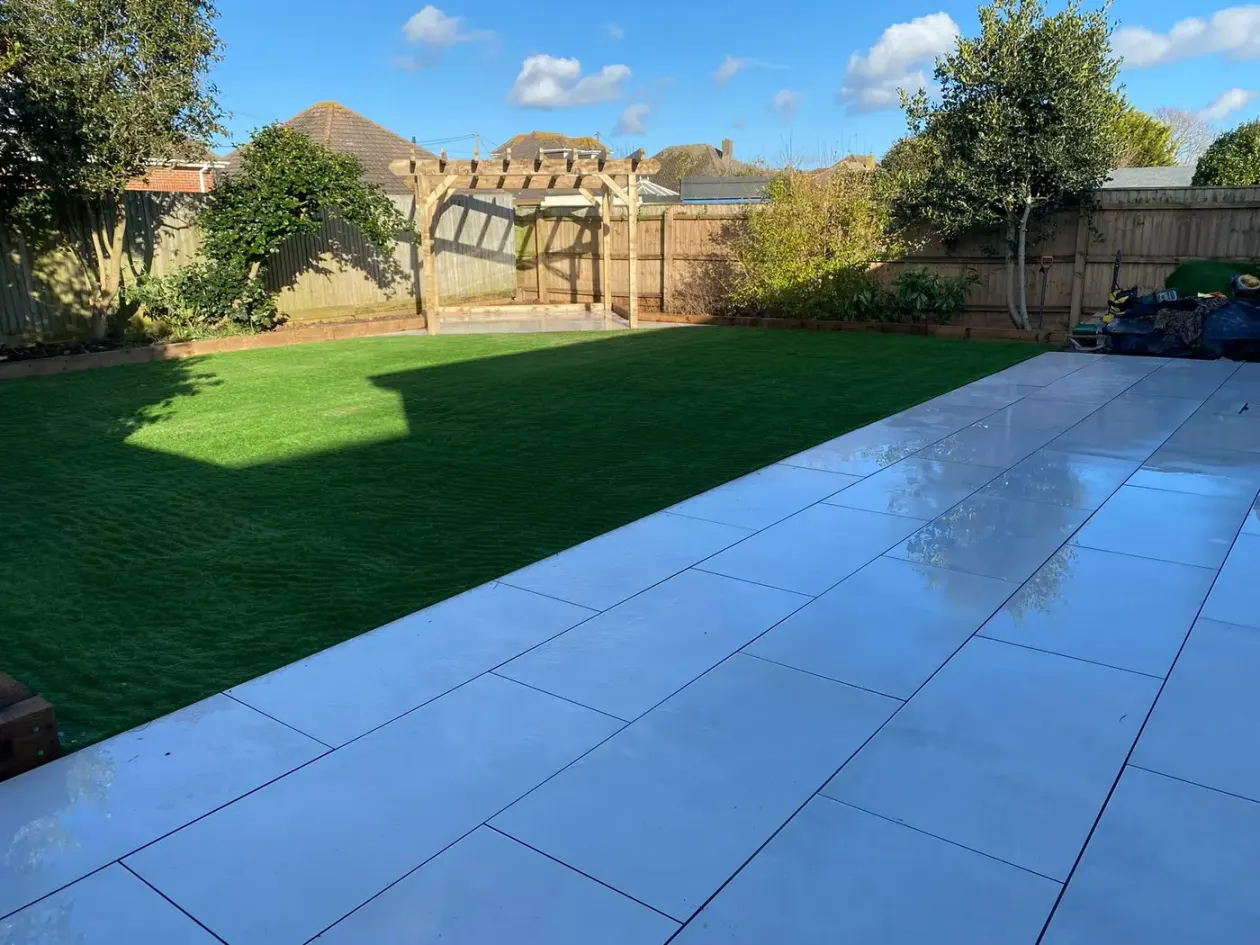
Good lawns start with good ground
Rolling out turf is the quick part. What decides whether a new lawn thrives is everything that happens before the first roll arrives. Turf laid on compacted, stony or uneven ground struggles to root, dries out quickly and shows every bump.
New lawns are one of the services Daniel John Landscapes provides across Southampton and Hampshire, either on their own or as the finishing stage of a garden renovation.
Preparing the site
Preparation usually starts by removing the old grass, weeds and any debris. The soil is then cultivated to break up compaction, and stones and roots are taken out. Where the soil is poor or the level needs raising, topsoil can be added.
- Clearing old turf, weeds and rubble
- Breaking up compacted soil
- Adding topsoil where needed
- Firming and raking to a fine, even surface
Levelling for a lawn you can mow
An uneven lawn is frustrating to mow and can hold water in the dips. After cultivation, the ground is firmed and raked several times until the surface is even, with any gentle slope running away from the house. Edges next to a patio or path are set slightly below the paving so that a mower can run over the edge cleanly.
Sleeper or timber edging can give a lawn a crisp outline and stop it creeping into borders, as seen on several of the jobs in our projects gallery.
Laying the turf
Turf is a living product, so it should be laid as soon as possible after delivery. Rolls are laid in a staggered pattern, like brickwork, with joints butted tightly together. Boards are used to avoid treading on freshly laid turf, and the finished lawn is firmed down so the roots make good contact with the soil beneath.
Aftercare in the first weeks
The first few weeks decide how well a new lawn establishes. Turf needs regular watering, especially in dry or warm weather, until the roots have taken hold. It is best to keep foot traffic to a minimum and wait until the grass has rooted before the first light cut. You will be given simple aftercare advice when the job is finished. If you are budgeting, our guide explains how much turfing costs and why preparation matters.
Real grass or artificial?
Some gardens are better suited to artificial grass, particularly very shaded plots, heavily used play areas or homes where nobody wants to mow. Others suit a natural lawn. We can talk through both options so you choose what fits your garden and routine.
We are based in Sholing and lay new lawns throughout Southampton, Eastleigh, Romsey, Winchester, Portsmouth and the New Forest.
Common reasons new lawns fail
Most problems with new turf come down to a handful of causes. Laying onto compacted or poorly prepared soil stops roots getting down. Turf left rolled up for too long can yellow and weaken before it is even laid. Gaps between rolls dry out and shrink, leaving visible lines. Not watering enough in the first weeks, particularly in warm spells, is perhaps the most common issue of all.
Careful preparation and simple aftercare avoid almost all of these, which is why so much of the work on a new lawn happens before the turf arrives.
Lawns as part of a bigger garden
A new lawn often follows other work. Where a garden is being renovated, the patio, paths, fencing and any structures are built first, so that heavy materials and machinery do not cross freshly laid turf. The lawn is then shaped to suit the finished layout, with clean curves or straight edges that meet the paving neatly. This order is part of how we approach a full garden renovation.
Shaping and edging the new lawn
The outline of a lawn has a big effect on how the garden feels. Gentle curves soften a long, narrow plot, while crisp rectangles suit modern patios and straight boundaries. Edging with sleepers, timber boards or a paving strip keeps the shape sharp and stops grass spreading into borders, saving time on trimming every summer.
Frequently asked questions
When is the best time to lay turf?
Autumn and spring are generally the easiest times, because the soil is moist and temperatures are mild. Turf can be laid at other times of year, but it needs more careful watering in hot, dry spells.
How long should I keep off a new lawn?
Try to keep off it as much as possible for the first couple of weeks while the roots establish.
Do you remove the old lawn?
Yes. Clearing the old grass and weeds is part of preparing the ground.
How often should I water new turf?
Regularly, especially in dry or warm weather, until it has rooted. You will be given aftercare advice when the lawn is finished.
Can a new lawn be part of a full garden renovation?
Yes. Turf is often the final stage of a garden renovation, laid after patios and fencing are complete.