
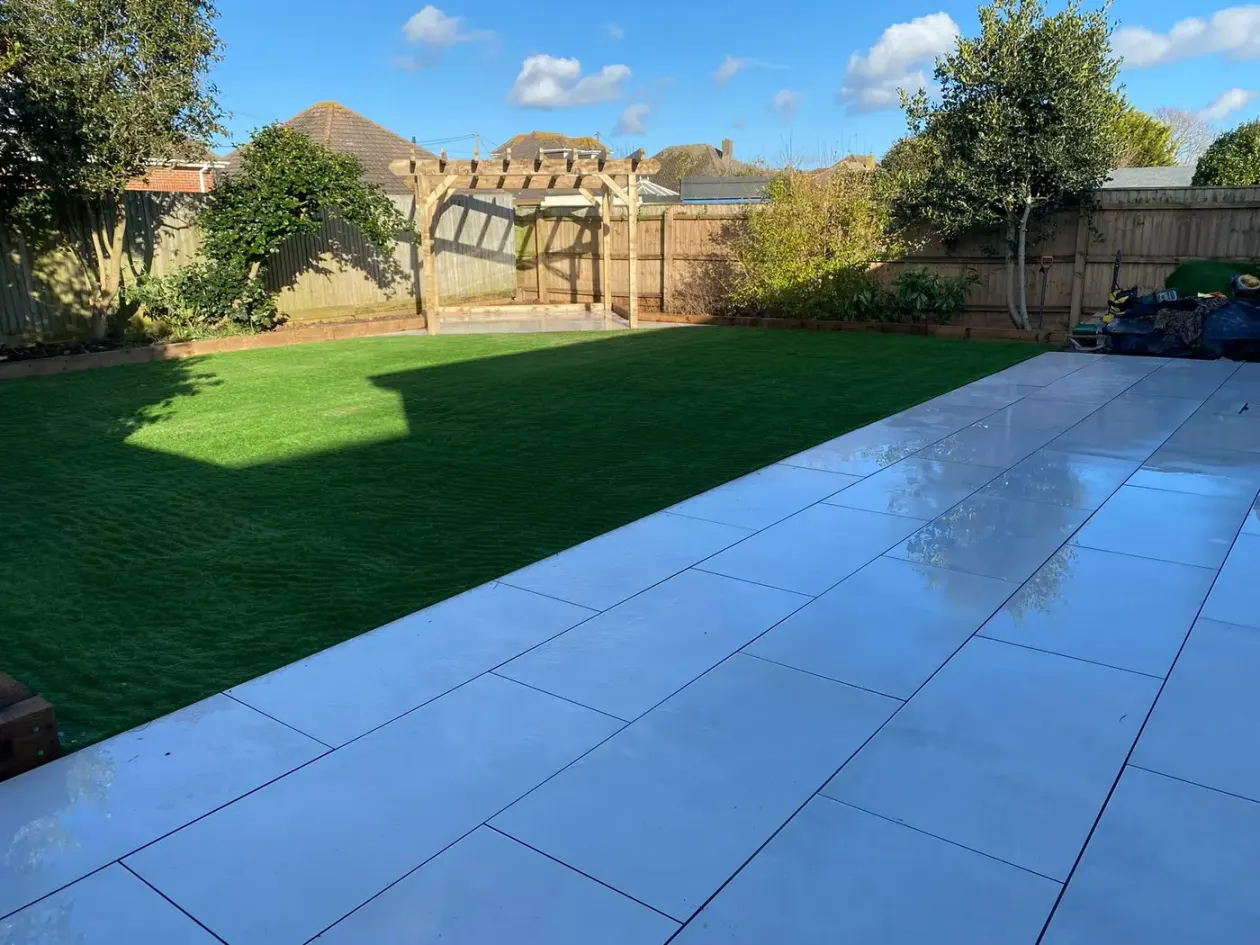
What a turfing quote covers
A typical turfing job breaks down into four parts: getting rid of what is there now, preparing the soil, supplying and laying the turf, and clearing away waste. The balance between them changes from garden to garden. A level plot with a thin old lawn might be mostly about the turf itself, while a bumpy, weed-filled or compacted garden can see the groundwork take up the larger share.
Clearing the old lawn
Old grass, moss and weeds have to come off before new turf goes down, otherwise they compete with it and leave a lumpy surface. This is usually done by cutting the existing lawn off in strips. Heavily overgrown areas, old paths or hidden rubble take longer, and every barrow-load has to be taken somewhere, which adds to the waste side of the quote.
Levelling and topsoil
This is where much of the value lies. The soil is dug or rotavated to loosen it, stones and roots are picked out, and the surface is raked, firmed and raked again until it is even. Hollows and slopes may need extra topsoil brought in to correct them. Ground that is heavy clay, very stony or badly compacted after building work needs more effort to bring it into condition, but skipping that step is the most common reason a new lawn struggles.
Turf quality and area
Turf is sold in different grades, from hard-wearing mixes suited to family gardens and play to finer ornamental lawns that need more care. Area obviously drives the amount needed, but the shape matters too. A simple rectangle wastes very little, while curves, narrow strips and lots of edges mean more cutting and more offcuts.
Access and waste
Turf is heavy, especially when wet, and it needs laying soon after delivery. If rolls and topsoil can be barrowed straight down a side path, the job moves quickly. If everything has to come through the house, extra time goes into carrying and protecting floors. Removing the old lawn and spoil can mean skip hire or several trips, depending on the volume.
Best time of year to lay turf
Mild, damp weather gives new roots the easiest start, which is why autumn and spring are popular. Turf can still be laid in summer, but it dries out quickly and needs a lot more watering in the first few weeks. Frozen or waterlogged ground is best avoided altogether. Timing does not usually change the price of the work, but it can affect how much effort goes into getting the lawn established afterwards.
Turf, seed or artificial grass?
Seeding needs the same ground preparation as turf but uses cheaper material, so it can cost less up front. The trade-off is time: a seeded lawn takes weeks to thicken up and is vulnerable to birds, weeds and dry spells along the way. Turf gives an instant finished look. In heavily shaded spots, or where a lawn gets very heavy use, artificial grass may be worth comparing, and our artificial grass cost guide explains how that is priced.
Looking after new turf
For the first few weeks, regular watering matters more than anything else, particularly if the weather turns warm. Keep foot traffic to a minimum until the roots knit into the soil underneath; you can test this by gently lifting a corner. The first cut should be a light trim with the mower blades set high. With good preparation and simple care, the lawn should settle in and thicken up through its first season.
See our new lawns and turfing page for how we lay a lawn, or our garden renovations page if the turf is one part of a bigger project.
Frequently asked questions
What is included in the price of turfing a garden?
Usually removing the old grass and weeds, preparing and levelling the soil, any extra topsoil needed, supplying and laying the turf, and clearing away the waste. It is worth checking each item is listed.
Is it cheaper to seed than to turf?
The seed itself costs less than turf, but the ground preparation is the same. Seed also takes much longer to establish and needs more care while it does.
Why does ground preparation cost more than the turf itself?
Digging, clearing stones, levelling, adding topsoil and firming the ground is labour-heavy. It is also what decides whether the lawn roots well and stays even, so it is not a step worth cutting.
When is the best time of year to lay turf?
Autumn and spring offer mild temperatures and natural rainfall that help roots establish. Summer laying is possible but relies on frequent watering, and frozen or waterlogged ground should be avoided.
How soon can I walk on new turf?
Light use is fine once the turf has rooted into the soil below, which often takes a few weeks depending on the weather. Until then, keep off it as much as you can.