
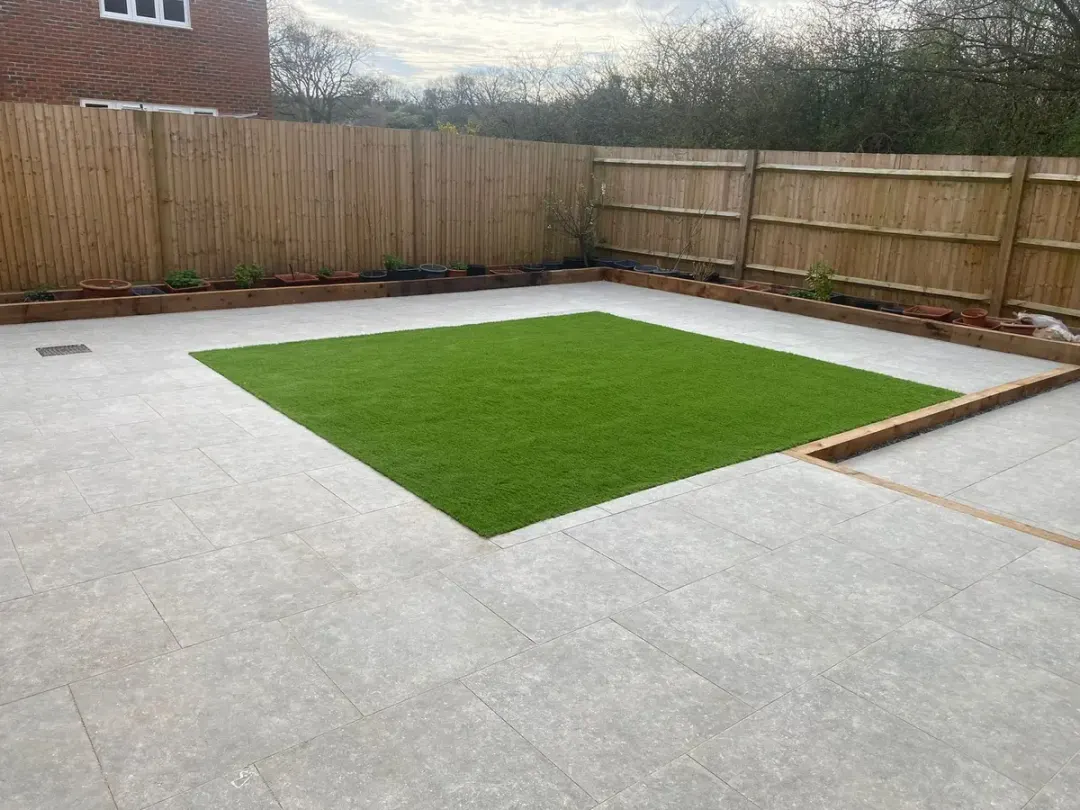
A fence is only as good as its posts
Most fences fail at the bottom, not the top. Posts that were not set deeply enough, or that rot where they meet the soil, start to lean after a few winters of wind. Once one post goes, the panels either side follow. When we install fencing, the posts are treated as the most important part of the job.
Fencing is one of the services Daniel John Landscapes offers across Southampton, Eastleigh and the surrounding area, either as a standalone job or as part of a full garden renovation.
Fence types we can fit
Different gardens need different boundaries. A family garden might need a solid, private fence; a front garden might suit something lower and more open; and a boundary beside a patio might call for a smart, contemporary finish.
- Closeboard fencing with vertical boards for strength and privacy
- Panel fencing set between timber or concrete posts
- Picket fencing for front gardens and play areas
- Fence screens to hide bins, sheds or neighbouring views
Gravel boards and protecting the timber
Gravel boards run along the base of a fence and keep the panels or boards off the soil. This simple detail stops damp from wicking up into the timber and makes the bottom of the fence much easier to replace if it is ever damaged. Concrete or treated timber gravel boards can be used depending on the look you want and the posts being fitted.
Where a fence sits beside raised beds or a sloping garden, the base needs extra thought, because soil piled against timber is one of the fastest ways to shorten its life.
Replacing panels or the whole run?
If only one or two panels have blown out and the posts are sound, replacing the damaged sections can be the sensible choice. If several posts are loose, rotten or leaning, replacing panels alone usually just delays the problem. In that case it is often better to renew the whole run, so that the new fence is straight and evenly supported from end to end.
Daniel will look at the posts, the panels and the ground before suggesting either approach, and explain the reasons so you can decide. See our page on fence repairs for smaller jobs, or the guide to fence installation cost for a full replacement.
Boundaries, neighbours and practicalities
Before any boundary work starts, it is worth knowing who is responsible for the fence and talking to your neighbours if the work affects them. Access matters too: in terraced streets, materials may need to come through the house, so we plan how they will be carried in and how the old fence will be removed.
Fencing often works best alongside other jobs. A new boundary is the ideal backdrop for a patio, artificial grass or a timber pergola, and fitting the fence first protects the finished surfaces.
Areas we cover for fencing
We are based in Sholing, Southampton, and fit fencing in Eastleigh, Romsey, Winchester, Portsmouth and the New Forest, travelling up to 30 miles. See our areas page for more.
How a new fence is installed
A typical installation starts by removing the old fence and any concrete around the old posts. The new line is set out with a string line so that it runs straight and follows the boundary. Post holes are dug to a suitable depth, each post is set plumb and fixed firmly, and the line is checked again before panels or boards go on. On sloping ground the fence is stepped or raked so that the top line looks tidy and the bottom stays clear of the soil.
Once the fence is complete, the site is cleared and the old materials are taken away.
Making a new fence last
Timber lasts longer when it can dry out after rain. Keeping soil, plants and compost heaps away from the base, trimming climbers before they become heavy and applying a suitable treatment every few years all help. Checking fixings after a big storm can catch small problems before they spread.
Frequently asked questions
Can you replace just one fence panel?
Yes, if the posts either side are sound. If the posts are loose or rotten, Daniel will explain why replacing the run may be the better option.
What are gravel boards for?
They sit at the base of the fence and keep the timber off the soil, which helps protect it from damp and makes the bottom easier to replace.
Do you remove the old fence?
Removing and clearing the old fence can be included as part of the job.
Do you fit fencing in Eastleigh?
Yes. Eastleigh is one of the main areas we cover, along with Southampton, Romsey, Winchester, Portsmouth and the New Forest.
Can fencing be part of a bigger garden project?
Yes. Fencing is often fitted as part of a garden renovation before lawns or artificial grass go down.