
Why dog owners choose artificial grass
A busy dog can wear a real lawn down to bare earth surprisingly quickly, especially along fence lines and favourite running routes. Urine scorches the grass into yellow spots, and every wet walk brings mud back indoors. A synthetic surface stays green, stays usable after rain and does not need mowing. For many households that alone makes the change worthwhile.
Drainage comes first
With dogs, drainage is not optional. Liquid needs to pass straight through the grass backing and away into the ground rather than sitting in the base. That depends on a free-draining stone layer and on the soil beneath being able to take the water. On heavy clay or in low spots, extra drainage may be needed. A lawn that drains badly is the main cause of lingering smells.
Sub-base and membrane
The old turf and topsoil are dug out and replaced with compacted crushed stone, topped with a finer layer that is levelled smooth. Some installers use a sharp sand top layer, but for pet areas a fine stone dust or grit layer is often preferred because it lets liquid through more freely and holds less odour. A membrane underneath helps stop weeds coming up from the soil below.
Infill choices
Infill is brushed into the pile to help the blades stand upright and to add weight. Silica sand is the traditional option. For lawns used by dogs, there are also infills designed to reduce odours. Some installations use no infill at all. The right choice depends on how the lawn is used, how much the dog runs and digs, and how much brushing you are happy to do.
Edging and digging
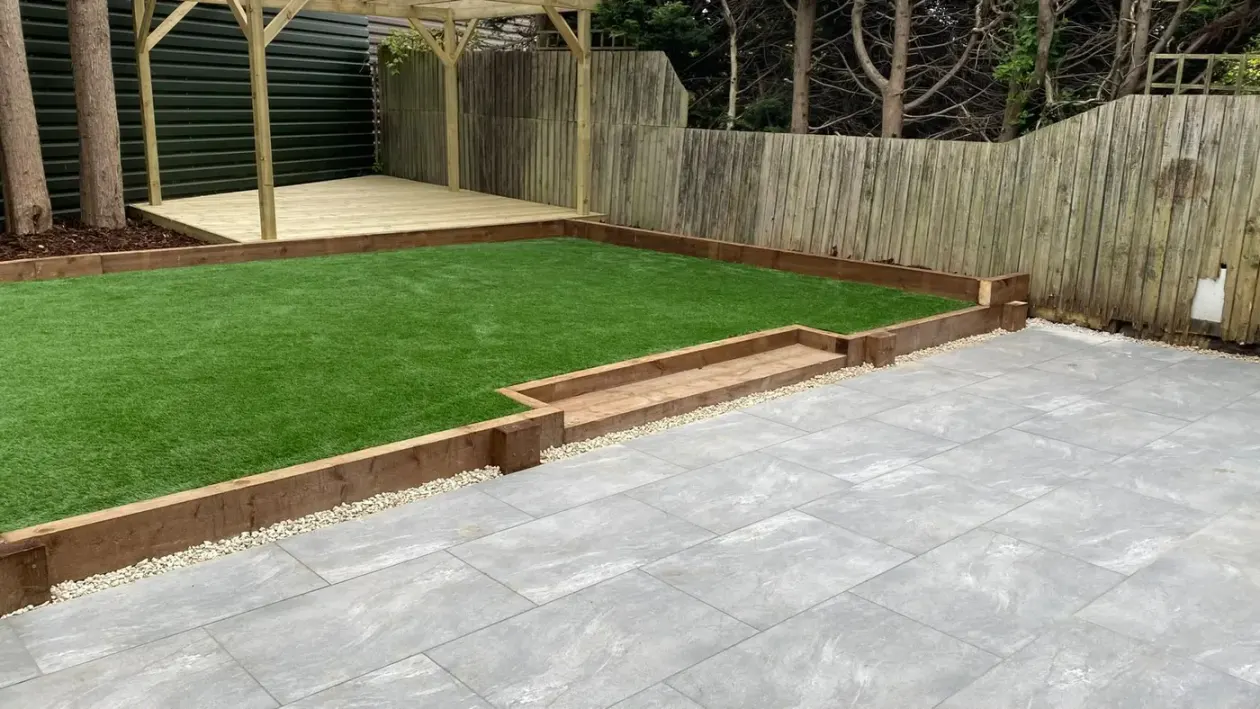
Dogs that like to dig will find the edges first. A firm perimeter, such as timber sleepers, treated boards or a paving strip, gives the grass something solid to be fixed to and makes it far harder to lift. Joining the grass carefully and securing it well across the whole area also stops determined paws from pulling up seams.
Cleaning and smells
Solid waste is simply picked up as it would be on any lawn. Rinsing the area with a hose every so often, and more often in hot weather, keeps it fresh. Spots that see repeated use benefit from a pet-safe artificial grass cleaner. Brushing the pile occasionally lifts the fibres and stops debris settling in. If smells persist despite cleaning, it usually points back to drainage in the base.
Heat on sunny days
Synthetic fibres can warm up noticeably in strong sun, much like paving. In practice this is most noticeable in south-facing, unshaded gardens through the middle of summer. Giving your dog access to a shaded area, hosing the grass down on very hot days and planning shade from trees, a pergola or a fence can all help.
When real grass is the better choice
Artificial grass is not right for every dog or every garden. Some owners prefer the natural feel and cooling effect of a living lawn, and a large garden with good drainage may cope perfectly well with a hard-wearing turf. A sensible compromise can be a smaller synthetic area near the house with real grass further out. Our new lawns and turfing page explains how a real lawn is laid.
For more on installation, see our artificial grass page and the artificial grass cost guide. To talk about your garden, call 07841 510110 or use our contact page.
Frequently asked questions
Is artificial grass safe for dogs?
Laid properly, it is widely used in gardens with dogs. The key points are good drainage, secure edges and regular rinsing, plus shade on hot days because the fibres can warm up in strong sun.
How do you stop artificial grass smelling of dog urine?
Start with a base that lets liquid drain straight through, then rinse the area regularly and use a pet-safe cleaner on spots that see repeated use. Odour-reducing infill can also help.
What base is best for artificial grass used by dogs?
A well-compacted, free-draining crushed stone base topped with a fine stone dust or grit layer is often preferred over sharp sand, because it lets liquid pass through more easily.
Will my dog be able to dig it up?
It is much harder to dig up when the perimeter is fixed to a firm edge such as sleepers or boards and the joins are secured well. Persistent diggers may still worry at corners, so firm edging is worth the effort.
Does artificial grass get hot for dogs' paws?
It can get warm in direct summer sun. Providing shade, hosing the surface on very hot days and making sure your dog has somewhere cooler to lie all help.