
Start with the problems, not a shopping list
A garden can have attractive materials and still be awkward to use. A table might block the back door, the only sunny corner might be hard to reach, or a narrow path might make carrying tools unnecessarily difficult. Before choosing paving or timber, write down what is not working and what you would like to keep. That gives a layout a purpose rather than simply filling the space with new features.
Design-and-build, with practical decisions together
Daniel John Landscapes plans garden layouts as part of its own build projects. The conversation connects the intended use of the garden with the groundwork needed to achieve it: where surfaces meet, how water moves, and how materials will reach the site. This page concerns those decisions within a garden renovation, not an independent landscape designer producing a standalone planting plan. Describe what you need when enquiring so the proposed scope can be checked.
A front garden that works every day
Front garden ideas should begin with the route to the door. Leave room to carry shopping, open gates and reach bins without squeezing past planting or furniture. Think about visibility from windows, whether a lower boundary would feel more welcoming, and which parts need an easy-clean surface. A simple arrangement with a clear entrance can be more useful than many small features. Existing sound paving or established plants need not be removed just because the layout is changing.
Space for sitting, moving and maintaining
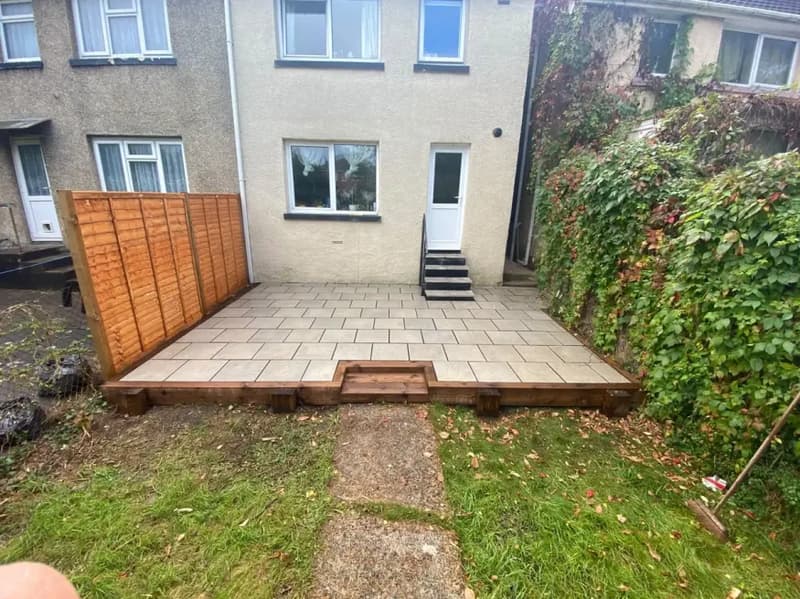
In a back garden, mark out the size of your table and chairs, including the room needed to pull a chair out. Then consider the journey between the house, seating, lawn and storage. A patio should suit that movement, not just a convenient slab size. Keep access to drains and outdoor taps, and allow enough room around borders to maintain them. Check the view from inside the house as well as the view from the garden.
Let levels and drainage shape the plan
A sloping plot may need separate usable areas rather than one broad surface. Steps, retaining edges and the height beside the house affect what can safely fit. Surface water must have a suitable route, and raising paving must not hide air bricks or compromise the building. These practical checks come before the final material choices. They also help distinguish a manageable layout change from work that needs more detailed structural or drainage advice.
Choose an upkeep routine you can live with
Be honest about the time you want to spend outside maintaining the garden. A larger lawn means more mowing; closely spaced features create fiddly edges; timber needs suitable care. Neither a highly planted garden nor a mostly paved one is automatically the right answer. Work backwards from your routine, including children or pets where relevant, and leave flexibility for changing needs. Materials can then be chosen to support the arrangement rather than dictate it.
Understanding the budget before committing
Garden design cost depends on the scope of planning and the work it leads to. Site measurements, difficult levels, drainage decisions, material alternatives and revisions can all affect the effort involved. Ask whether layout discussions are included in the build quote and what drawings, if any, are proposed; do not assume a separate design package is included. The garden renovation cost guide explains the construction factors without giving a price for your garden.
Bring a brief, not a finished answer
Send your postcode, the approximate space available and the changes you are considering through the quote form. Photos of the current garden can help the later conversation, along with a short list of priorities. Look at the real transformations on the projects page for examples of layouts and material junctions, without assuming another garden can simply be copied. Daniel is based in Sholing, Southampton, working within about 30 miles.
Frequently asked questions
Do I need a garden designer?
Not every garden needs a separate design appointment. If the changes are straightforward, layout decisions may be worked through as part of a build. Complicated sites or a detailed planting brief can need specialist input; clarify what your project requires before commissioning work.
What affects garden design cost?
The complexity of the site, level of drawings required, number of options and revisions, and any specialist advice all matter. For design-and-build, ask exactly which planning work is included in the construction quote.