
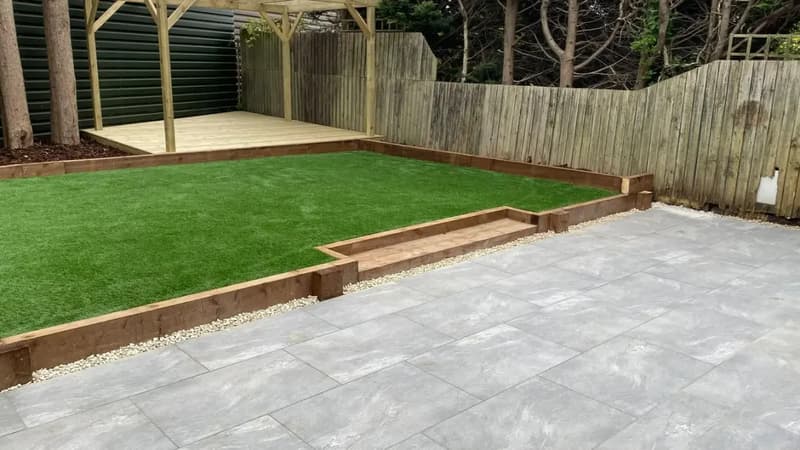
Why there is no single number
Manufacturers publish an expected lifespan and a warranty for each product, and those figures vary between ranges. They are the best starting point, so ask to see them for the grass you are considering and read what the warranty actually covers. Some exclude wear from pets, furniture or heat damage.
Those figures also assume the grass has been laid properly. Two lawns using the same roll can age very differently if one sits on a well-built base and the other was rolled out over soil. The product sets the ceiling; installation and use decide how close you get to it.
The base decides how long it stays flat
Most of the complaints people have about older synthetic lawns are really base problems. Dips appear where soil has settled, ripples form where the surface underneath has moved, and puddles sit in hollows that were never levelled out. None of that is the grass wearing out.
Our approach on the artificial grass page is to dig out, then build a compacted, free-draining stone base with a weed membrane and firm edging. A thin layer of sand over existing ground is quicker to lay, but it gives water and weight nowhere to go, and the lawn starts to show it within a few seasons.
What wears it out
Fibres flatten fastest along the routes people walk every day, from the back door to the shed or the gate. Goalmouths, swing landing areas and the spot under a trampoline all take a pounding too. Heavy, regular traffic does not ruin the grass, but it does make those paths look tired sooner.
Heat is the one that catches people out. A barbecue set down on the lawn, a fire pit, a dropped cigarette or concentrated sunlight bouncing off certain windows can melt or distort the fibres. Once that happens the damaged area cannot be brushed back up.
- Constant foot traffic on the same line
- Dogs digging, scratching or using one corner
- Barbecues, fire pits and hot embers
- Strong sunlight reflected from glazing
- Heavy furniture left in one place for months
Artificial grass
- Compacted, free-draining stone base
- Weed membrane beneath the grass
- Firm edging to keep the grass secure
Edges, joins and the membrane
Failures rarely start in the middle of a lawn. They start at the edges, where the grass lifts if it was not fixed securely to a firm border, and at the seams, where poorly bonded joins open up and show a line. Both are easy to avoid at the laying stage and awkward to fix later.
Weeds are similar. A proper membrane under the base stops most growth from below. Anything that appears later is usually seeding into debris on top, which a light brush and occasional clearing keeps under control.
Care that helps it last
Upkeep is light, but it is not nothing. Brush the pile against the grain every so often, especially on walking routes, so the fibres stand up evenly. Clear leaves and blossom before they break down into a layer that holds moisture and feeds moss.
If pets use the lawn, rinse the area they favour regularly so the drainage stays clear and smells do not build up. Our guide to artificial grass for dogs goes into that in more detail. Moving garden furniture around now and then also spreads the wear.
Signs it needs relaying or replacing
Look for fibres that stay flat however much they are brushed, bald patches where the backing shows, seams that will not stay closed, melted spots and water that sits on the surface after rain. A lawn that is lumpy or sunken but still has a healthy pile is pointing to the base rather than the grass.
When the base has failed, putting new grass straight on top just repeats the problem. It is usually better to lift the old surface, rebuild the foundation properly and then lay either the original grass, if it is still in good order, or a new product. The artificial grass cost guide explains what goes into that kind of quote.
If you are still deciding whether synthetic grass is right for you at all, our comparison of artificial grass vs real turf may help. For a look at your own lawn, contact Daniel or call 07841 510110.
Want a professional to handle it?
Tell us what you have in mind and Daniel will talk it through with you.
07841 510110Step 1 of 3
What would you like help with?
Frequently asked questions
Does artificial grass fade in the sun?
Most products include UV protection, but strong sun over many seasons can soften the colour. Check the manufacturer's information on UV stability for the range you choose.
Can a worn patch be replaced on its own?
Often, yes. A damaged section can be cut out and a new piece joined in. The repair may look slightly different at first because the surrounding grass has already weathered.
Do dogs shorten its life?
They can add wear, mainly from digging, scratching and urine in one area. Regular rinsing and a free-draining base go a long way to limiting the effect.
Will it still drain after a few years?
It should if the base was built to drain and the surface is kept clear of leaves and debris. Blocked drainage is usually down to a clogged surface or a base that was never free-draining.
Can old artificial grass be lifted and the base reused?
Sometimes. If the existing base is level, firm and draining well it may be topped up and reused. If it has sunk or holds water, rebuilding it is the safer choice.
Related guides
Related services
Covering Southampton and Hampshire