
First decide what matters to you
Do you prefer a regular, consistent surface or natural changes in colour and texture? How much cleaning are you happy to do? Will the paving sit in shade, and will it be used mainly for dining or as a route through the garden? These questions are more useful than asking which material is universally better.
Budget also depends on the actual paving and the installation, not just whether the slab is porcelain or sandstone. Access, preparation, changes in level and edging can affect either choice. Keep those parts of the job in view while comparing finishes. A material you like still needs to suit the shape and practical demands of your garden.
Porcelain: consistency and straightforward upkeep
Porcelain is manufactured, with low porosity and a finish that can be more consistent than natural stone. It often suits people who want a modern look and a calm pattern beside the house. Low water absorption can make everyday cleaning easier, but outdoor dirt still sits on the surface and needs clearing away.
The compromises are worth considering too. A very regular appearance may not give you the variation you enjoy in natural paving. Cutting and bedding need an approach suited to porcelain, and the chosen texture matters for outdoor use. Do not choose by colour alone or assume every porcelain product offers the same grip. Our porcelain patios page explains the installation in more detail.
Indian sandstone: texture and character
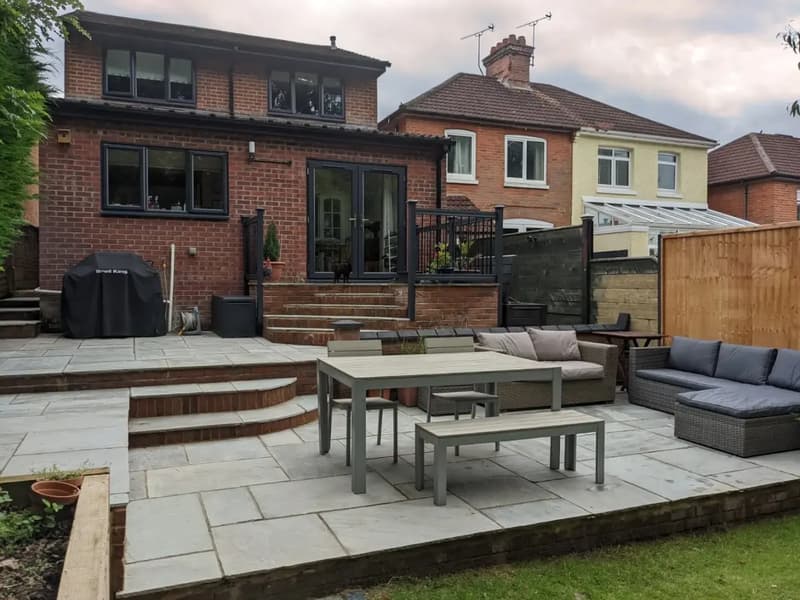
Sandstone brings natural variation in shade and grain. Riven surfaces have a split texture, while sawn products offer a more regular outline and may have other finishes. That choice can help the paving sit comfortably with existing brickwork and planting, especially if you want a less uniform appearance across the whole patio.
Natural variation is also something to accept rather than a defect to eliminate. Matching a weathered existing area can be difficult, and cleaning needs to suit the stone and joints. Sealing may be worth discussing for a particular product, but it is not an automatic requirement. The Indian sandstone patios page covers riven and sawn choices and general care.
Patios
- Porcelain, sandstone and natural stone patios
- Compacted sub-base built in layers
- Falls for drainage away from the house
The practical differences at a glance
Use this comparison as a starting point, then check the actual slab specification and care instructions. A material category cannot tell you the exact appearance, surface grip or maintenance of every product sold under that name. Samples viewed outdoors and questions about the proposed installation help turn a broad preference into a more useful choice.
| Consideration | Porcelain | Indian sandstone |
|---|---|---|
| Looks | Manufactured, often more consistent; suits a modern finish. | Natural shade and texture variation; riven or sawn options. |
| Cleaning | Low porosity helps upkeep; surface dirt still needs removing. | Use cleaning suitable for the stone, finish and pointing. |
| Slip resistance | Depends on the outdoor surface finish and cleanliness. | Depends on texture, wet conditions and surface growth. |
| Sealing | Do not assume sealing is needed; check product guidance. | Discuss suitability and appearance changes before treating. |
| Laying method | Compacted sub-base, suitable bedding and planned falls. | Compacted sub-base, supported slabs, pointing and planned falls. |
Slip, shade and daily use
No patio should be treated as slip-proof. Water, leaves and algae can affect either surface, particularly where shade keeps it damp. A rough-looking slab is not enough to establish how it will perform. Ask about the intended outdoor finish and keep the surface clear, rather than relying on a general claim about one material.
Think about furniture as well. A heavily textured surface may feel different beneath chair legs from a more regular one. Light and dark tones also look different when wet, and samples should be judged in the conditions where the patio will be used. Those everyday details can make a bigger difference to your satisfaction than choosing whichever material is currently fashionable.
Both need the right preparation and falls
Daniel lays porcelain, sandstone and slate on a compacted sub-base with falls for drainage. Support beneath the slabs and a sensible route for rainwater are essential parts of the proposed work. A new surface cannot compensate for poor levels or ground that has not been prepared to support it.
The bedding and joint treatment need to suit the paving. Existing surfaces, excavation and access should be considered before the visible finish is chosen in isolation. Read our patio laying page for the wider process and the patio cost guide for the factors behind the quote. Compare what is included underneath the paving as carefully as the slab itself.
Ask about the choice for your garden
If you like both materials, explain what appeals to you about each. A consistent seating area, natural texture or easier routine cleaning are useful priorities to bring to a conversation. Mixing finishes may be possible, but their edges, levels and laying methods need considering together so the garden does not become a collection of disconnected surfaces.
Daniel John Landscapes is based in Sholing, Southampton, and patios are one of the business's main jobs. Use the contact page to describe the space, existing paving and any changes in height. Advice can then relate to your actual garden rather than treating a broad comparison as a specification for work that has not been seen.
Want a professional to handle it?
Tell us what you have in mind and Daniel will talk it through with you.
07841 510110Step 1 of 3
What would you like help with?
Frequently asked questions
Which is cheaper, porcelain or sandstone?
There is no reliable answer from the material name alone. The particular slabs, access, preparation and finishing all matter. Our patio cost guide explains the factors without giving figures for an unseen garden.
Which is easier to keep clean?
Porcelain's low porosity generally makes cleaning straightforward. Both still need surface dirt and leaves removing, and sandstone needs a cleaning method suitable for its finish and pointing.
Is porcelain cold or slippery?
Outdoor paving can feel cold in cool weather. Grip depends on the particular outdoor finish, wetness and cleanliness; porcelain should not be assumed either slippery or slip-proof just because of its material name.
Can you mix porcelain and sandstone in one garden?
It can be considered, with the transition, levels and laying methods planned together. Choose a deliberate combination rather than assuming different slabs will meet neatly without preparation.
Which lasts longer?
There is no fixed lifespan comparison for every product and garden. The paving specification, supporting base, drainage, joints and care all affect how either surface performs over time.
Related guides
Related services
Covering Southampton and Hampshire