
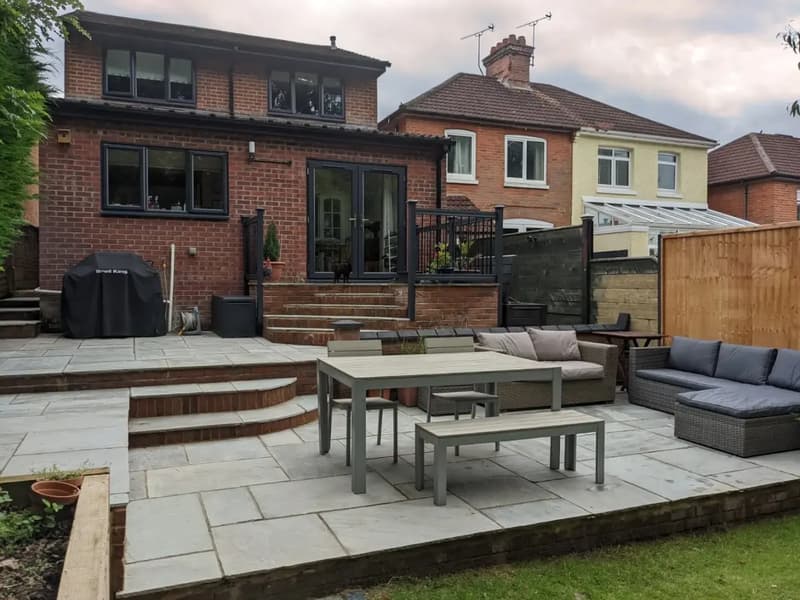
A surface with natural variation
Sandstone is a useful option when you want paving that does not look identical from slab to slab. Changes in shade and grain are part of its character. A patio can feel softer and more traditional than a uniform manufactured surface, particularly when the stone is seen alongside planting and existing brickwork. The whole laid area matters more than a single sample.
Natural variation also means choosing with realistic expectations. A colour description is not a promise that every piece will match. Look at several slabs together and consider how their tones sit beside the house. If you prefer a more consistent appearance, our porcelain patios page explains the alternative. Neither finish is automatically right for every garden.
Riven or sawn sandstone?
Riven sandstone has a split surface with an uneven texture. It can give paving a more rustic character, with the surface catching light differently across each piece. That texture is part of the appeal, but it is worth thinking about chairs, table feet and the way you want the patio to feel underfoot before choosing it.
Sawn sandstone is cut for a more regular finish and a cleaner outline. Products can have further surface finishes, so sawn does not by itself tell you everything about grip or cleaning. Ask about the particular paving being considered, rather than assuming all sawn stone performs alike. Our porcelain versus sandstone comparison puts those choices alongside everyday upkeep and appearance.
The structure underneath the stone
Daniel lays sandstone on a properly compacted sub-base with falls for drainage. The first task is establishing the finished levels and making space for the supporting layers. Existing paving, soft ground and difficult access can all affect how that stage is approached. Putting attractive stone over an unsuitable surface would leave the important part of the job unresolved.
Bedding supports each slab, while the setting out allows for the chosen sizes and joint pattern. Natural stone needs care to keep the finished surface even without trying to erase its intended texture. Pointing completes the gaps between the slabs and should suit the paving and installation. Preparation, bedding and joints are connected decisions, not separate finishing touches.
Plan the water route and changes in level
A patio needs a fall so rainwater has somewhere to go. The correct route depends on the house, surrounding ground and other surfaces, so it should be settled before laying starts. A low corner that repeatedly holds water is not solved just by choosing a different stone. The supporting levels need to guide water away appropriately.
Where the garden slopes, steps or raised areas may help create a practical seating space. Consider how the paving will connect to a door, a path or a lawn and where an edge changes height. Our patio page explains the wider approach to levels, and the projects gallery includes completed sandstone paving with changes in level and brick-edged steps.
Cleaning and sealing: keep it simple
Clear leaves and loose dirt rather than allowing them to build up on the surface. Clean spills promptly and choose a method suitable for the stone and pointing. Strong chemicals or aggressive pressure washing can be inappropriate for some finishes and joints. Start gently and follow the paving supplier's care guidance rather than treating every patio in the same way.
Sealing is a choice to discuss, not a requirement to assume. The type of stone, finish and desired appearance all matter, and some treatments can change how paving looks. A sealer does not replace cleaning or correct drainage. If you are considering one, check suitability and maintenance requirements first, including what would be involved if the treatment needs renewing later.
Sandstone within the wider garden
A sandstone patio can be the seating area within a full garden renovation, with its boundaries and connections planned alongside fencing or a new lawn. Decide what you need from the space: room for a table, a comfortable route through the garden or a smaller place to sit. Material choice follows those practical decisions rather than replacing them.
If some existing sandstone is staying, matching needs care. New stone may differ in tone from paving that has weathered, even when its name sounds similar. Discuss whether a close match or a deliberate contrast is more realistic. Avoid ordering on the assumption that a photograph or product label will guarantee an invisible join between old and new areas.
Request a quote for your patio
The area, access, levels and edging influence the work as well as the stone. Our patio cost guide explains what to consider without giving a figure for a garden that has not been seen. Tell Daniel what is already there, how you reach the space and whether the project includes steps or other changes.
The business travels up to 30 miles from Sholing, covering Southampton, Eastleigh, Romsey, the New Forest, Portsmouth and Winchester. Use the form below or contact Daniel with your postcode and the kind of sandstone finish you have in mind. If you are undecided between materials, that is a useful question to bring to the first conversation.
Frequently asked questions
Is Indian sandstone slippery when wet?
Wetness, surface texture and algae all affect grip. No paving should be assumed slip-proof. Choose a suitable outdoor finish and keep it clean, especially in shade where surface growth can build up.
Riven or sawn: which should I choose?
Riven gives a more textured, rustic appearance; sawn offers more regular edges and can have different surface finishes. Consider the actual product, furniture and how you will use the patio.
Does sandstone need sealing?
Not automatically. Ask about the particular stone and finish, and whether sealing would alter its appearance. Follow suitable care guidance; sealing is not a substitute for regular cleaning.
Can you match a new patio to existing sandstone?
A close match may be possible, but natural variation and weathering can make an exact match difficult. Daniel needs to see the existing paving before discussing the options.
Can you lay steps in sandstone?
Steps can be considered within a sandstone patio project. Their levels, support and edge details need planning with the rest of the paving rather than being added after the main area is finished.